


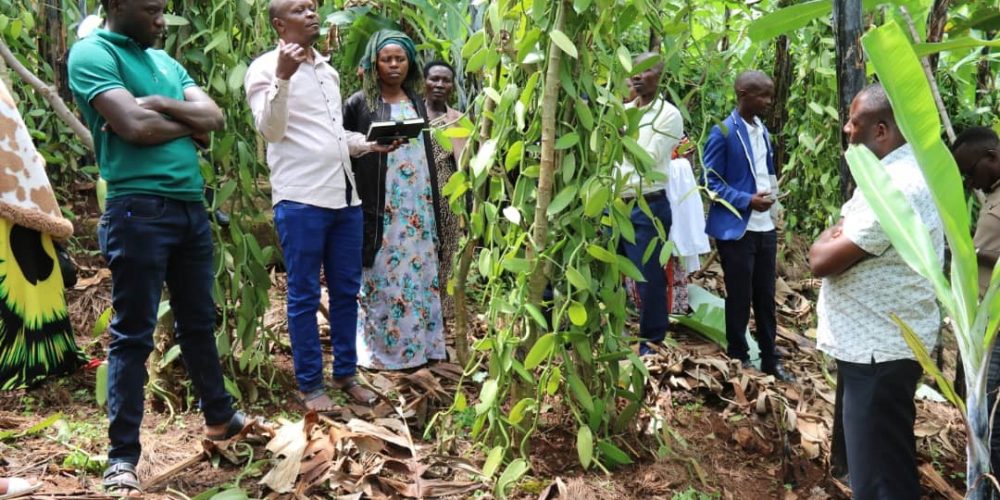
Vanilla farmers from Rwenzori region are increasingly discovering that some of the most powerful lessons in agriculture come not from classrooms, but from fellow farmers. A recent farmer exchange visit to Ibanda District demonstrated how peer learning can inspire practical change, strengthen farmer organizations, and improve participation in high-value markets.
The exchange visit, organized by the Kabarole Research and Resource Centre (KRC-Uganda) under the Vanilla Initiative for Building Resilience and Nurture Thriving Communities (VIBRANT) project funded by Enabel, brought together 60 lead farmers from Kasese, Bundibugyo, and Ntoroko districts. The farmers visited the Kyeikucu Turihamwe Cooperative in Ibanda- one of Uganda’s successful examples of organized vanilla production and marketing. The objective of the visit was simple but powerful: expose farmers to a functioning cooperative model while strengthening their knowledge on collective marketing, improved agronomic practices, and certification systems that enable farmers to access premium markets.
Learning from a successful cooperative model
At Kyeikucu Turihamwe Cooperative, farmers were introduced to a well-structured governance system that has helped build trust among members and buyers. With more than 650 members across Ibanda District, the cooperative operates through organized farmer groups led by local leaders who regularly meet and participate in decision-making processes. Transparent financial management, clear leadership roles, and proper documentation- including audited accounts and Annual General Meetings (AGMs)-have helped the cooperative grow into a reliable market partner. Through organized aggregation of vanilla, the cooperative has been able to supply large volumes of high-quality produce to buyers while securing competitive prices for farmers.
Farmers also learned how strong institutions help solve common challenges in the vanilla sector, including premature harvesting, theft, and low market prices. By working collectively and promoting good farming practices, the cooperative has significantly improved both production and quality among its members.
Certification and premium markets
A major focus of the exchange was the role of certification in accessing premium markets. Farmers learned how compliance with standards such as Organic, Fairtrade, and Rainforest Alliance certification can increase market opportunities and attract higher prices.
Certification requires consistent adherence to good agricultural practices, environmental conservation, fair labour conditions, and strong documentation systems. The cooperative demonstrated how farmers maintain records, follow traceability procedures, and implement environmentally responsible farming practices in order to meet certification requirements. These systems ensure that vanilla delivered by farmers can be traced from the garden to the final buyer, a critical requirement for global markets.
Practical lessons from model farms
Beyond cooperative management, the visit provided hands-on learning through visits to model vanilla farms. Farmers observed practical agronomic techniques such as proper pollination, soil fertility management using organic manure, mulching, natural pest control, and responsible harvesting. They also learned innovative approaches such as using natural inputs like ash and aloe vera for pest management, protecting farms from contamination, and maintaining clean storage environments since vanilla beans easily absorb surrounding odors.
These practical demonstrations helped farmers visualize how improved practices can increase productivity while maintaining the quality standards required by premium markets.
Building stronger farmer communities
One of the strongest messages that emerged from the visit was the power of collective action. Organized farmer groups not only strengthen market bargaining power but also help farmers share knowledge, maintain quality standards, and mobilize resources for growth. Participants were encouraged to return to their communities and replicate the lessons learned by strengthening farmer groups, promoting improved agronomic practices, and encouraging collective marketing.
A path toward a stronger vanilla sector
As the VIBRANT project continues to support farmers in the Rwenzori region, initiatives such as exchange learning visits are expected to play a crucial role in transforming the vanilla value chain. By connecting farmers with successful models, strengthening cooperatives, promoting certification and quality production, these initiatives are laying the foundation for a more resilient and competitive vanilla sector in Uganda.
Ultimately, the lessons from Ibanda highlight an important truth: when farmers learn from each other, the entire agricultural community grows stronger.
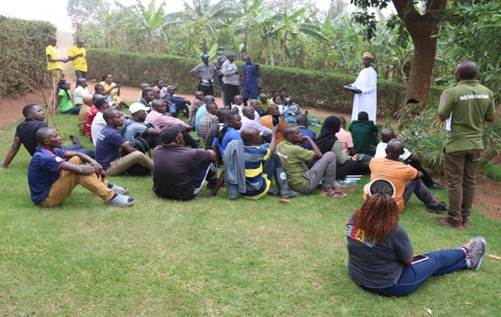
The model farmer of Kyeikucu cooperative in Ibanda taking Vanilla farmers of Bundibugyo and Ntoroko through certification processes during exchange visit.
Compiled by Oteba Eric

