


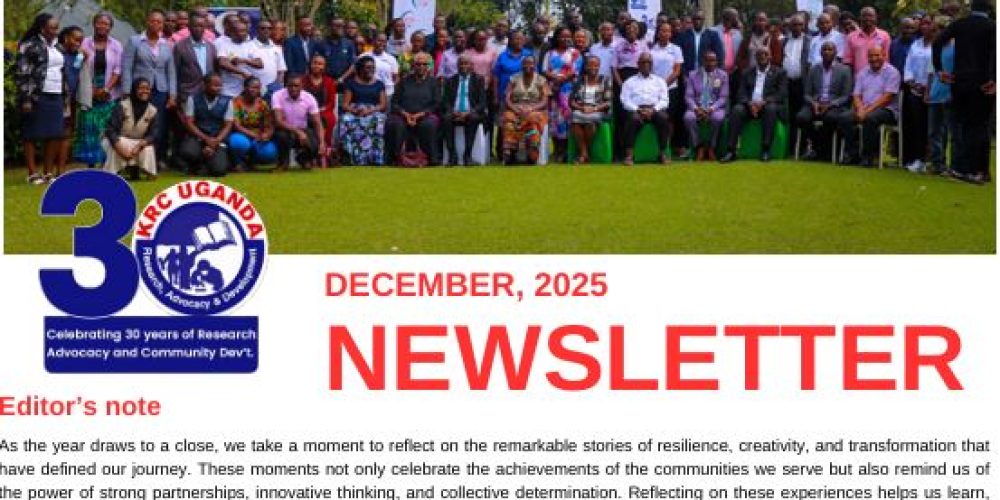
As the year draws to a close, we take a moment to reflect on the remarkable stories of resilience, creativity, and transformation that have defined our journey. These moments not only celebrate the achievements of the communities we serve but also remind us of the power of strong partnerships, innovative thinking, and collective determination. Reflecting on these experiences helps us learn, appreciate the progress made, and find inspiration to continue empowering communities with renewed purpose.
As campaigns intensify, we are reminded that words and actions during this season can either strengthen our communities or divide them. While elections give citizens a voice, they also demand responsibility from leaders, supporters, and institutions alike. Peace is not maintained by authorities alone it is shaped by everyday choices, from how we speak online to how we treat those with different views. Now more than ever, empathy, restraint, and respect must guide our participation in the democratic process.
KRC-Uganda’s mid-2025 results show real progress from the BD-funded agroecology project, with farmers producing more, caring better for their land, and improving household wellbeing. Women and youth are playing a stronger role in farming and family decisions, reflecting meaningful change at community level. While food security is improving, nutrition outcomes need closer attention and better measurement. Overall, the project is moving in the right direction, with clear lessons to strengthen and build on what is working.
In 2003, KRC introduced the Microfinance Association (MFA) model to help rural farmers and small businesses in the Rwenzori region access financial services. What began as a small pilot has grown into a trusted system, with Kyarusozi MFA standing as proof that the model works. Over time, it has helped women, youth, and vulnerable households save, borrow, invest, and improve their livelihoods. Despite challenges, the MFA model remains a practical and relevant path to financial inclusion in rural communities.
The VIBRANT project has brought new hope to vanilla farmers in Ntoroko by uniting them through Vanilla Care Groups, where working in small teams has made it easier to share skills, lower costs, and improve harvests. Beyond better production, these groups have strengthened community ties and made support more practical and within reach. This collective approach is also helping farmers build resilience preparing them not just to endure difficult times, but to recover and move forward. By diversifying crops, saving together, gaining new skills, and accessing better markets, farmers across the Rwenzori region, especially women and youth are taking a more active role, making farming more inclusive and future-ready. These practical steps show that with the right support, smallholder farmers can face shocks with confidence and stability.

